Slow making offers a quiet return to touch, rhythm and presence in a fast digital world. Through simple stitch, we reconnect with our senses and allow awareness to emerge gently through cloth and thread.
Why Slow Making Matters in a Digital Age
We’re living in a time of extraordinary technological change.
AI can write, design, generate images and answer questions in seconds. Our lives are increasingly shaped by screens, speed and systems that operate faster than our nervous systems can comfortably follow.
This isn’t something I see as all negative, although when I think about it I do find it over whelming.
Technology can be useful and creative, and it can help us stay connected with others, I do understand this can be positive for alot of people.
But it does mean that many of us spend large chunks of our day thinking, scrolling, clicking and responding, often disconnected from our bodies, our senses, our feelings and the physical world around us.
Textiles for Wellbeing grew from a simple question:
What do we need more of, not less of, in a digital age?
For me, the answer is quite complex, but in relation to my appraoch here on this website, I believe many people want and crave slowness and groundedness.
Returning to the senses through making
My background combines textile design, over 25 years in arts education, and training in the Therapeutic Arts at IATE. Across all of these spaces, I’ve seen how creative processes help people slow down, reconnect with their senses, and feel more present in the world around them, not through analysis, but through experience.
When we stitch, our hands move in rhythm. Our attention settles. Breath softens and the nervous system begins to regulate.
This isn’t about producing artwork.
It’s about embodied awareness.
In Gestalt-informed practice, awareness happens in the here and now, through contact with what’s present. Textile making offers a direct way into this. Fabric responds to touch. Thread records movement and every stitch leaves a trace of attention.
Meaning emerges through doing, not thinking.
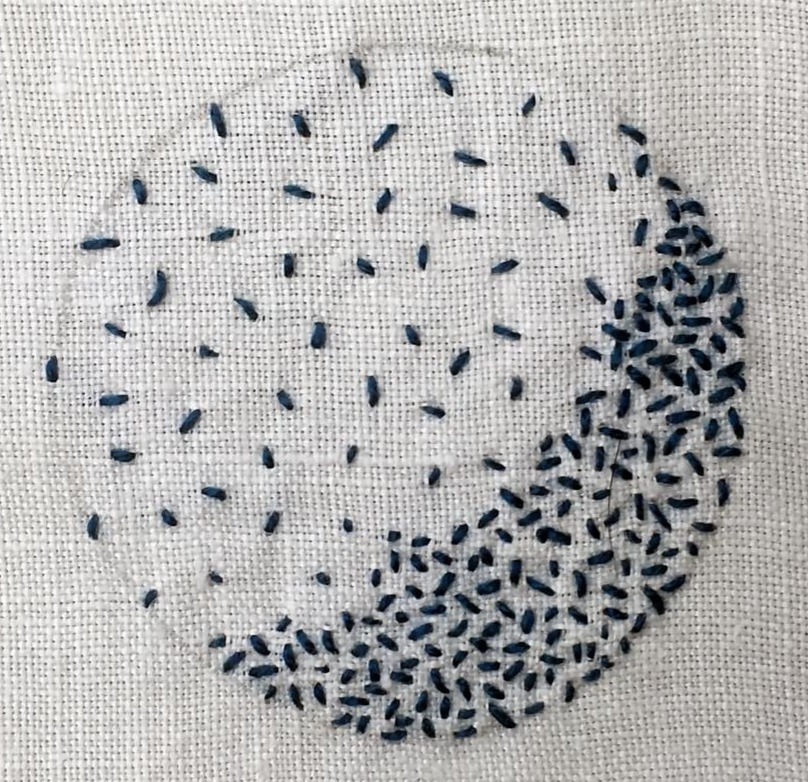
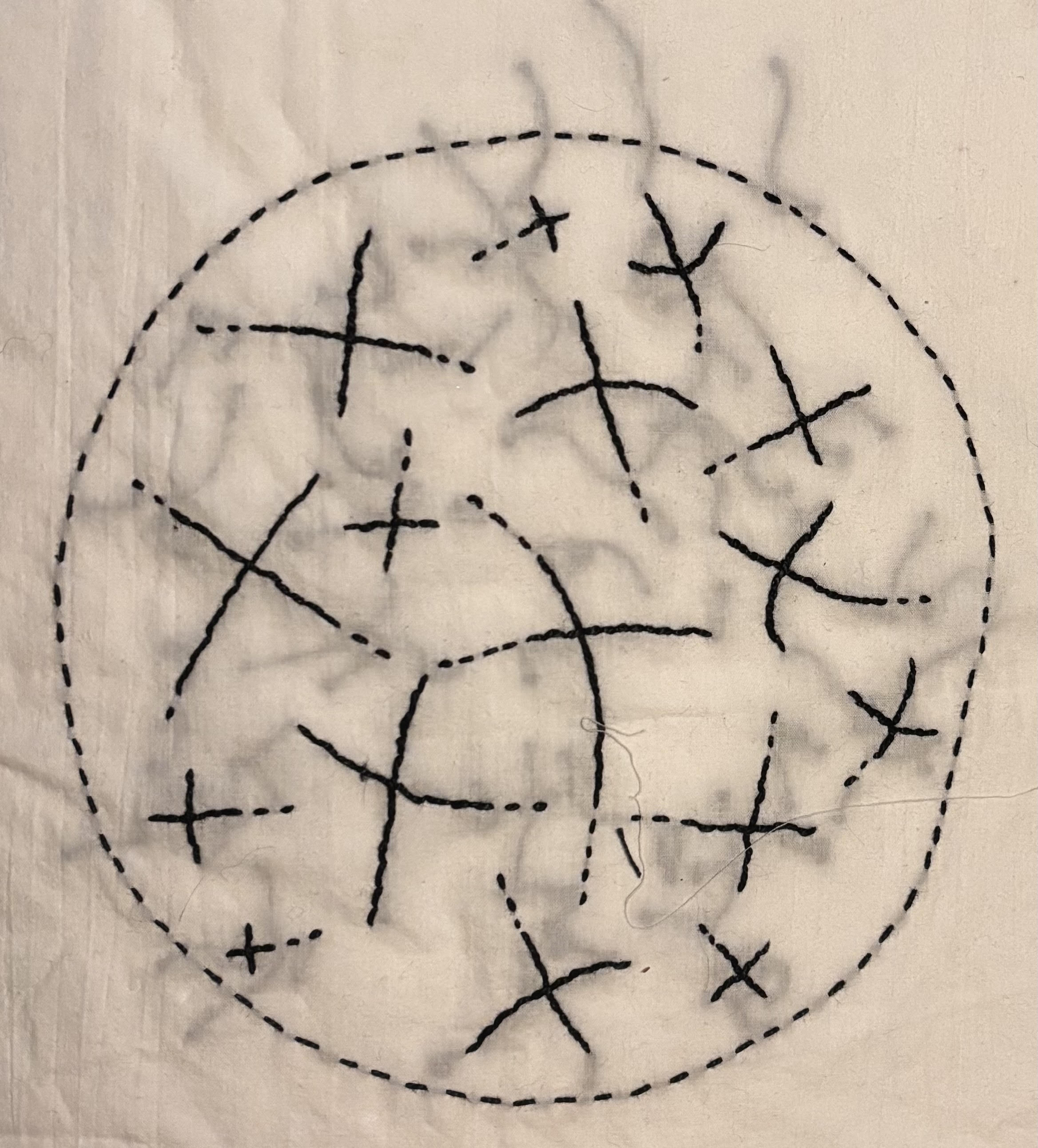
Hands, thread, a simple circle
In the wellbeing workshops, we begin simply.
No concepts. No goals.
Just making.
This is intentional.
In a world that constantly asks us to process information and make decisions, starting with materials allows the body to arrive before the mind gets too busy.
Only later do we gently introduce the lenses of Connection, Identity and Change, not as tasks to complete, but as a way of noticing what may already be present.
Although this first workshop begins quietly, with inward attention, it isn’t about withdrawing from the world.
It’s about re-learning how to notice.
Once awareness is present in the body, it naturally extends outward, to materials, space, people and the wider environment.
Later workshops explore this more directly, inviting reflection on how we relate, express ourselves and respond to what shifts around us. The foundation practice simply creates the conditions for that noticing to begin.
Why this matters now
As AI becomes more capable, I believe that many human experiences may become more 'abstract' and digitally driven.
We communicate digitally and we all consume content rapidly. Without realising it, many of us seem to be spending less time with physical processes that unfold slowly.
In this sense, slow making becomes a way of returning to what matters.
Not because it rejects technology, but because it reminds us of what it feels like to be human.
Process over product
Some people keep their stitched pieces.
Others photograph them and let them go.
Often, the value is in the making itself.
This work isn’t about outcomes or achievements.
It’s about creating small pockets of slowness inside busy lives.
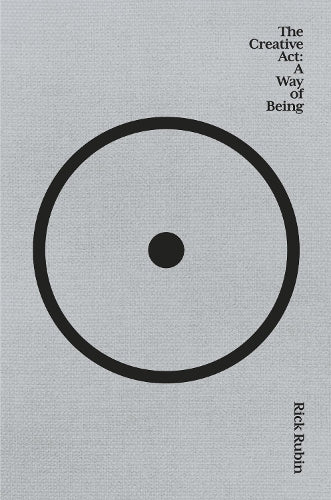
Rick Rubin writes in The Creative Act about creativity as becoming available rather than forcing results. I see these workshops in the same way — as spaces where people can meet themselves through material, without pressure or performance.
Five minutes is enough.
One stitch is enough.
A gentle invitation
Textiles for Wellbeing isn’t a retreat from the digital world.
It’s a return to something essential within it.
A place to slow down, notice, and reconnect through cloth and thread.
You don’t need experience.
You don’t need an idea.
You don’t need to explain anything.
You simply begin.